From all of us at the Victorian Society of Alberta, wishing you a very merry Christmas, and a happy, healthy New year!

From all of us at the Victorian Society of Alberta, wishing you a very merry Christmas, and a happy, healthy New year!
Here is our recommendation for this month's Book Tuesday
With cooler days coming, we start thinking of cozy sweaters.
From 1908, lots of ideas and plans for knitted and crocheted items.
Enjoy
The Victorian Society of Alberta
The Columbia Book of Yarns
by Anna Schumacker


The Prime Minister, Justin Trudeau, today issued the following statement on Louis Riel Day:
“Today, we join the Métis Nation and all Canadians in commemorating the legacy of Métis leader and founder of Manitoba, Louis Riel.
“A politician, an impassioned activist, and a visionary, Louis Riel advocated and fought for equality, social justice, and minority language rights. Although he was elected to represent Manitobans in Ottawa, he was never permitted to take his duly elected seat in Parliament. In spite of this injustice, his contributions to defending the rights and culture of the Métis Nation and Francophones have left a lasting impact on Confederation and paved the way for a more inclusive country.
“As we celebrate Louis Riel’s life, we also acknowledge the injustices and systemic racism the Métis people – and all Indigenous peoples – have faced for centuries, and continue to face today. We know that it is only by working together that we will make real progress in righting these wrongs.
“The Government of Canada continues to work with Indigenous peoples to build a renewed relationship based on affirmation of rights, respect, cooperation, and partnership. We are working with the Métis Nation to amplify its voices, address its unique needs and concerns, and advance its inherent right to self-determination and self-government. Louis Riel’s vision will keep inspiring us as we continue to walk the shared path of reconciliation and to strengthen the Canada-Métis Nation relationship for the benefit of our country and all Canadians.
“On this day, I invite everyone to honour Louis Riel’s enduring influence, and to celebrate and learn about the Michif language as well as the culture, traditions, and way of life of the Métis. Let us recognize the essential role they have played, and continue to play, in building a better Canada.”

Remembrance Day was first observed in 1919 throughout the British Commonwealth. It was originally called “Armistice Day” to commemorate armistice agreement that ended the First World War on Monday, November 11, 1918, at 11 a.m.—on the eleventh hour of the eleventh day of the eleventh month.
From 1921 to 1930, Armistice Day was held on the Monday of the week in which November 11 fell. In 1931, Alan Neill, Member of Parliament for Comox–Alberni, introduced a bill to observe Armistice Day only on November 11. Passed by the House of Commons, the bill also changed the name to “Remembrance Day”. The first Remembrance Day was observed on November 11, 1931.
Every year on November 11, Canadians pause in a moment of silence to honour and remember the men and women who have served, and continue to serve Canada during times of war, conflict and peace. We remember the more than 2,300,000 Canadians who have served throughout our nation’s history and the more than 118,000 who made the ultimate sacrifice.

As the weather turns cooler and we start to look forward to hanging out by the fire, I thought it might be nice to look back on the first in person ramble we have had since the pandemic started!
It was a hot, smokey day but a lovely flaneury was had by all!
Heritage Park, Calgary, August 14, 2021!
Enjoy
Victorian Society of Alberta
Photos by Kevin Jepson


This page has an excellent history of the settlement of Western Canada.
There are great references included for further study as well.
Enjoy
Victorian Society of Alberta
Settling the West: Immigration to the Prairies from 1867 to 1914
by Erica Gagnon, Collections Researcher
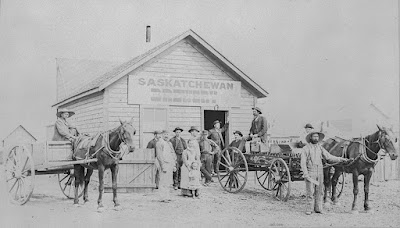
From 1867 to 1914, the Canadian West opened for mass settlement, and became home to millions of immigrant settlers seeking a new life. This immigration boom created key industries still important to Canada’s international role – like agriculture, mining, and oil. The Prairie Provinces of Manitoba, Saskatchewan, and Alberta grew rapidly in these years as settlers began to transform the barren prairie flatland and establish unique cultural settlements. Many motivations brought immigrants to Canada: greater economic opportunity and improved quality of life, an escape from oppression and persecution, and opportunities and adventures presented to desirable immigrant groups by Canadian immigration agencies. By examining these motivations, an understanding of Prairie immigration experiences and settlement patterns evolves in interesting ways.
The immigration boom leading up to 1914 was one of the most important periods of Canadian population growth. Significant changes occurred in Canada after 1867 that made the Prairie immigration boom possible: the construction of a transcontinental railroad made transportation and travel accessible; the Dominion Lands Act of 1872 created free and fertile homesteads for settlers; the establishment of the North-West Mounted Police in 1873 guaranteed the safety of Prairie residents; and the creation of the Department of the Interior in 1873 attracted hard-working immigrants to the region.
In 1870, no urban centres existed on the Prairies. By 1911, thirteen cities with populations over 5,000 had been established.[1]
While the period after 1867 saw a rise in international immigration, the movement did not fully take off until 1896. After a tough economic recession from 1873 to 1896, Canada thirsted for settlers. With the help of Sir Clifford Sifton, Minister of the Interior from 1896 to 1905, immigrants began to find their way to the Canadian Prairies. Sifton is known for promoting the immigration of non-traditional immigrants to Canada. Sifton strongly believed that sturdy European immigrants were the best settlers for the challenging Prairies, because of their familiarity with agriculture, rural lifestyles, and harsh climates. He is best known for his statement that “a stalwart peasant in a sheep-skin coat, born on the soil, whose forefathers have been farmers for ten generations, with a stout wife and a half dozen children, is a good quality.”[2] Sifton disliked the idea of urban populations settling the Prairies, for they would congregate in cities, instead of developing Prairie homesteads. Instead, he promoted the immigration of groups like the Ukrainians, Hungarians, and Mennonites over the more ethnically “desirable” British immigrants.
Thanks to intensive advertising and international immigration agencies after 1867, foreign populations began to settle the Prairies. These immigrants fostered distinct ethno-cultural pockets and diverse industries in Manitoba, Saskatchewan, and Alberta. The population in the West exploded; Winnipeg grew from a city of 20,000 in 1886, to 150,000 in 1911.[3]
Saskatchewan’s population grew by 1124.77% between 1891 and 1911.[4]
Thousands of diverse immigrants came to Canada between 1867 and 1914
for different reasons. For the thousands of immigrants who were inspired
to emigrate in search of greater economic opportunities and improved
quality of life, the Canadian West presented seemingly infinite
possibilities. This category of immigrants encompassed populations of
Hungarians, French, Icelanders, Romanians, Chinese, and Ukrainians.
Continued at the link.
