Thursday, 3 June 2021

Days of Yore is a go... sort of.

The Days of Yore Festival in Didsbury was cancelled last year due to the pandemic.

For 2021 the event will be virtual!

The Victorian Society of Alberta will be participating in this event so make sure you check it out.

Here is the information from the organizers.

Enjoy
Victorian Society of Alberta


A little pandemic never held back a Viking or a Cowboy or a Soldier, and the Mountain View Arts Society is just as determined to bring you another great show no matter what! We might not be able to do an in-person festival in 2021, but we can sure bring you a Live Streaming Video Production featuring all your favourite reenactment performers and artisans!
 
For the 5th year, we invite you to STEP BACK IN TIME, only this year, from the comfort of your home, as we will be streaming live through Facebook and our YouTube channel. Yes, it's going to be different, but we are eager to bring you the best of our traditional, heritage reenactors.
 
We hope you will mark July 31st on your calendar - the Saturday of the August Heritage Long Weekend - and prepare to visit online with performers representing 9th C Scandinavia, 11th Century England, 18th Century England, 19th Century Canada, and the early 20th Century.
 
JOIN US ON JULY 31st - All you have to do is go to https://www.youtube.com/user/MVASociety/videos on July 31st and follow the entire Days of Yore Fest on our YouTube Channel. (Until then, you can follow older videos from events hosted by the Mountain View Arts Society.)
Follow us on Facebook or visit our website at www.daysofyore.ca.

Sunday, 30 May 2021

Statement on the Indian Residential School Policy May 30, 2021.

 It is with a heavy heart that your editor and, I am sure, the other members of the Victorian Society of Alberta, has watched the unfolding of the discovery of the remains of 215 children, some as young as three, in an unmarked grave at the Residential School in Kamloops BC.

The atrocity which was/is the Indian Residential School policy happened "On our watch" and as a group which studies and celebrates the Victorian and Edwardian Eras in Western Canada, we must include it, recognize it, and try to understand it. The results of this attempted cultural genocide are still being felt today by the survivors and descendants of those directly impacted. There is no way to separate the development and settlement of the West from the attempted destruction of the Indigenous peoples that were already here when the "Victorian" colonists arrived.

We have included several excellent books in our Book Tuesday lists that can help with learning about and understanding how that tragic part of our history unfolded, and I think it is important that we understand it and recognize it as the inter-generational trauma that it is.

I have included a link below to the report from the Truth and Reconciliation Commission that concerns the "missing children and unmarked burials".

This article from the Edmonton Journal is sobering indeed:
Why so many children died at Indian Residential Schools

At some schools, annual death rates were as high as one in 20!

I urge all our readers and followers to read up on this and, as we continue to study and "enjoy" the history of the development of the Canadian West in the Victorian and Edwardian context, we must never lose sight of the fact of this Governmental, Religious, and Societal attempt to destroy, humiliate, and dispossess the original inhabitants of these lands.

Kevin Jepson
Webmaster/Editor for
The Victorian Society of Alberta

~~~~~~~~~~~~~~~~~~~~~~~~~~~~~~~~~~~~~~~~~~~~~~~~~~~~~~~~~~~~~~~~~~~~~~~~~~

Canada's residential schools : missing children and unmarked burials: the final report of the Truth and Reconciliation Commission of Canada
National Centre for Truth and Reconciliation

Creators
Truth and Reconciliation Commission of Canada.
Description
"Canada’s Residential Schools: Missing Children and Unmarked Burials is the first systematic effort to record and analyze deaths at the schools, and the presence and condition of student cemeteries, within the regulatory context in which the schools were intended to operate. As part of its work the Truth and Reconciliation Commission of Canada established a National Residential School Student Death Register. Due to gaps in the available data, the register is far from complete. Although the actual number of deaths is believed to be far higher, 3,200 residential school victims have been identified. The analysis also demonstrates that residential school death rates were significantly higher than those for the general Canadian school-aged population."


ISBN
9780773546578


Monday, 24 May 2021

Happy Victoria Day Holiday Monday!

 From the Canada's History website.

For many Canadians, the Victoria Day holiday weekend is the time to start thinking about summer. Bonus: It’s a day off school! But why do we celebrate the birthday of Queen Victoria, who died nearly 115 years ago?

Until 1956, the birthday of the monarch—that’s the king or queen—of Great Britain was also celebrated in Canada, sometimes on his or her own birthday, sometimes around that time and sometimes on Victoria Day.

She was queen when Canada became its own country in 1867, and she was the one who chose Ottawa as our capital. After she died in 1901, the Canadian government declared that May 24 would be a holiday in her honour. (If the 24th fell on a Sunday, the holiday would be May 25.)

In 1957, Victoria Day was named the official birthday in Canada of Queen Elizabeth II. (In Great Britain, her birthday, which is actually April 21, is celebrated in June.) And Victoria Day is officially held on the Monday right before May 25.

Also just for fun 😁:


Tuesday, 11 May 2021

May Book Tuesday

Oops.
My apologies but I missed the April Book Tuesday and almost the May one too.

Better late than never I suppose. 😕

Enjoy
Victorian Society of Alberta

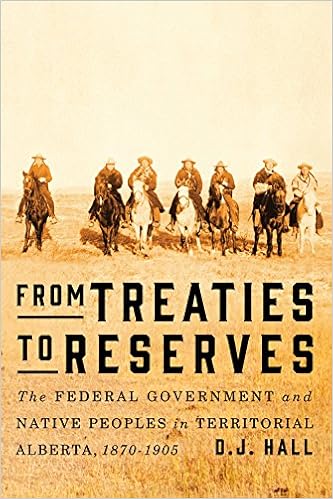
From Treaties to reserves
by D.J.Hall

Though some believe that the Indian treaties of the 1870s achieved a unity of purpose between the Canadian government and First Nations, in From Treaties to Reserves D.J. Hall asserts that - as a result of profound cultural differences - each side interpreted the negotiations differently, leading to conflict and an acute sense of betrayal when neither group accomplished what the other had asked. Hall explores the original intentions behind the government's policies, illustrates their attempts at cooperation, and clarifies their actions. While the government believed that the Aboriginal peoples of what is now southern and central Alberta desired rapid change, the First Nations, in contrast, believed that the government was committed to supporting the preservation of their culture while they adapted to change. Government policies intended to motivate backfired, leading instead to poverty, starvation, and cultural restriction. Many policies were also culturally insensitive, revealing misconceptions of Aboriginal people as lazy and over-dependent on government rations. Yet the first two decades of reserve life still witnessed most First Nations people participating in reserve economies, many of the first generation of reserve-born children graduated from schools with some improved ability to cope with reserve life, and there was also more positive cooperation between government and First Nations people than is commonly acknowledged. The Indian treaties of the 1870s meant very different things to government officials and First Nations. Rethinking the interaction between the two groups, From Treaties to Reserves elucidates the complexities of this relationship.

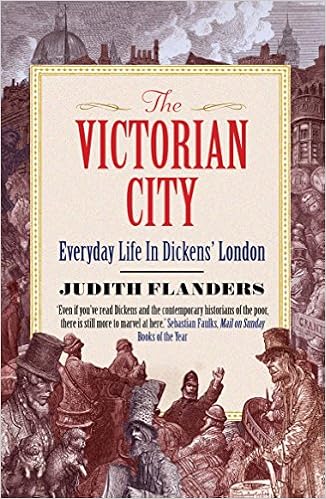
The Victorian City: Everyday Life in Dickens' London Paperback
by Judith Flanders 

The 19th century was a time of unprecedented transformation, and nowhere was this more apparent than on the streets of London. In only a few decades, London grew from a Regency town to the biggest city the world had ever seen, with more than 6.5 million people and railways, street-lighting, and new buildings at every turn. Charles Dickens obsessively walked London's streets, recording its pleasures, curiosities and cruelties. Now, Judith Flanders follows in his footsteps, leading us through the markets, transport systems, sewers, slums, cemeteries, gin palaces, and entertainment emporia of Dickens' London. The Victorian City is a revelatory portrait of everyday life on the streets, bringing to life the Victorian capital in all its variety, vibrancy, and squalor. No one who reads it will view London in the same light again.

Tuesday, 2 March 2021

March Book Tuesday

March already!

How time flies when you are having fun.

Here are two books to add to your collection for this months Book Tuesday.

Enjoy
Victorian Society of Alberta

The True Spirit and Original Intent of Treaty 7
by Treaty 7 Elders


The True Spirit and Original Intent of Treaty 7 is based on the testimony of over 80 elders from the five First Nations involved in Treaty 7 - the Bloods, Peigans, Siksika, Stoney, and Tsuu T'ina. Their recollections highlight the grave misconceptions and misrepresentations between the two sides, due in part to inadequate interpretation and/or deliberate attempts to mislead. The elders consistently report that the treaty as they understood it was a peace treaty, not a surrender of land, and that they had agreed to "share" the land with the white newcomers in exchange for resources to establish new economies - education, medical assistance, and annuity payments. The book provides both a historical overview of Treaty 7 and an analysis of the literature on treaties generally and Treaty 7 specifically. It makes clear that different agendas, different languages, and different world views affected each side's interpretation of events. This review of the events and interpretations surrounding Treaty 7 takes place at a time when aboriginal and indigenous peoples all over the world are re-evaluating their relationships with imperial powers. It was undertaken in good faith in hopes that it will begin a dialogue that can alter the dominant discourse of Euro-Canadian society, which has been so damaging to aboriginal people.


The Domestic Revolution: How the Introduction of Coal into Victorian Homes
by Ruth Goodman


The Domestic Revolution by historian Ruth Goodman is an interesting insight into how coal, and later soaps changed Britain, and the Empire. Everyone has heard of the Industrial Revolution, but in many ways the changing habits of how humans burned fuel for warmth, food-making and the domestic domain was more significant, if less well known.

For thousands of years humans have burned wood, peat, or variations thereof in the home – cooking and keeping warm. This practice shaped the landscape – wood was used everywhere – fuel, building, weapons, war, ships, homes etc. Land was managed, farmed, coppiced and the industries around this were important. Many folks did not travel far, and so utilised what was around them. Certain foods and ways of cooking do not manage on wood or peat, and others do not manage well on coal.

Ms Goodman describes cooking on wood, peat, dung and charcoal, how it was sourced and the foods which worked best. Cleaning was done, largely with wood ash, lime and various other intriguing ways. Ash doesn’t work on coal dirt and so hot water became the norm, and new vessels for boiling, new detergents and new roles.

Then came coal – which burns differently from wood, cooks differently, is used in industry differently, heats differently. People, pots, manufacturing, transport, food, housing, cleaning and pretty much every aspect you can think of changed with it, or as a result. Coal creates smoke which leaves smuts, dirt and dust. It produces pollution and is much harder to clean off. All those coal fires – say goodbye to your family tapestry, and your old cleaning habits. Bring on different smelting, transport, industry, soap-making, production and recipes.

The domestic hearth was, for much of history, the female domain, and although the records from women are scarce, from the 19th Century the records do bring to life the challenges, solutions and habits of women, from highborn ladies, to the lower classes. Status was important, and coal and soap brought with them status.

The book is a little slow to start, but the author knows her stuff and the book brings an interesting view on the lives of our ancestors, and how change, once it starts can be inexorable.

A good book for writers, and readers of history/historical fiction/fantasy as a reference to living with wood fires and coal, foods, cleaning and the role of women in these times (who became more tied to the home as things changed).

Wednesday, 10 February 2021

February Book Tuesday

A quick one for this month's delayed Book Tuesday.
Oops! 😏
I hope everyone is staying warm and healthy!

Enjoy
Victorian Society of Aberta

Ranching Women in Southern Alberta
-by Rachel Herbert

Once dominated by large cattle operations covering thousands of acres, Alberta in the 1880s-1930s saw a shift as small, family-owned ranches began to dot the province's southern plains. While this era of agriculture might conjure images of cowboys riding through the foothills or ranch hands tilling the prairie fields, women, too, played an integral part in this rapidly changing industry. Ranching Women in Southern Alberta explores the world of these women, and their efforts to ensure the economic viability of their family ranches and the social harmony of their families and communities. Rachel Herbert examines what life was like for ranching women, who faced a myriad of challenges while at the same time enjoying more personal freedom than their urban and European contemporaries. This book pays homage to the brave and talented women who rode the range, carving out a role for themselves during the dawn of the family ranching era.


Tuesday, 5 January 2021

Happy New Year's Book Tuesday

Well we are off on the odyssey of a new year!
Wishing you all a very safe, healthy, and prosperous 2021.

Here is the first Book Tuesday of the New Year.

Enjoy
Victorian Society of Alberta

We Don't talk about Those Women
Lethbridge's Red Light District 1880s to 1940

- by Belinda Crowson

A fascinating look at the history of Red Light District of Lethbridge Alberta.


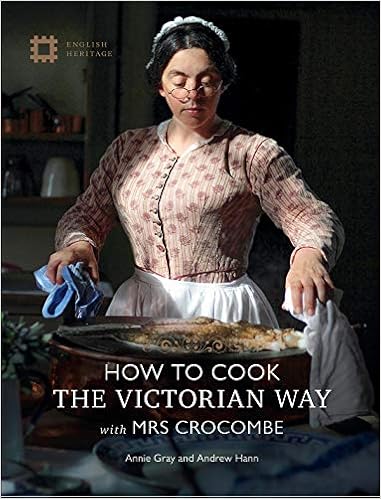
 How to Cook The Victorian Way
 with Mrs Crocombe

 - by Annie Gray and Andrew Hann

Mrs Crocombe is the breakout star of English Heritage's wildly popular YouTube series, The Victorian Way. Millions of fans around the globe devour her historical cookery videos, and their hunger for her content shows no sign of abating. In delightful contrast to the high-octane hijinks of many YouTube celebrities, The Victorian Way offers viewers a gentle glimpse into a simpler time - an age when tea was sipped from porcelain, not from plastic cups; when mince pies were meaty and nothing was wasted; when puddings were in their pomp and no kitchen was complete without a cupboard full of copper pots and pans. Avis Crocombe really did exist - she was head cook at Audley End House in Essex from about 1878 to 1884. Although only a little is known about her life, her handwritten cookery book was passed down through her family for generations and rediscovered by a distant relative in 2009. It's a remarkable read, and from the familiar (ginger beer, custard and Christmas cake) to thefantastical (roast swan, preserved lettuce and fried tongue sandwiches), her recipes give us a wonderful window into a world of flavour from 140 years ago. How to Cook: The Victorian Way with Mrs Crocombe is the definitive guide to the life, times and tastes of the world's favourite Victorian cook. It features authentic do-it-yourself recipes chosen and tested by Dr Annie Gray alongside insights into daily life at Audley End from Andrew Hann, beautiful food photography and a foreword by the 'face' of Mrs Crocombe, Kathy Hipperson. It showcases the best recipes from Mrs Crocombe's own book, alongside others of the time, brought together so that every reader can put on their own Victorian meal. It's a moreish smorgasbord of social history - an absolute must for fans, foodies and anyone with an appetite for the past.