March already!
How time flies when you are having fun.
Here are two books to add to your collection for this months Book Tuesday.
Enjoy
Victorian Society of Alberta
March already!
How time flies when you are having fun.
Here are two books to add to your collection for this months Book Tuesday.
Enjoy
Victorian Society of Alberta
A quick one for this month's delayed Book Tuesday.
Oops! 😏
I hope everyone is staying warm and healthy!
Enjoy
Victorian Society of Aberta
Ranching Women in Southern Alberta
-by Rachel Herbert
Well we are off on the odyssey of a new year!
Wishing you all a very safe, healthy, and prosperous 2021.
Here is the first Book Tuesday of the New Year.
Enjoy
Victorian Society of Alberta
We Don't talk about Those Women
Lethbridge's Red Light District 1880s to 1940
- by Belinda Crowson
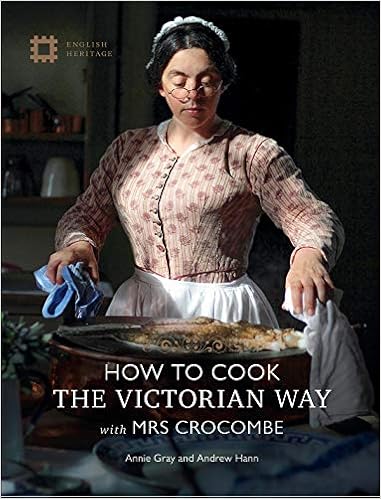
How to Cook The Victorian Way
with Mrs Crocombe
- by Annie Gray and Andrew Hann
Welcome to another Book Tuesday offering for you.
Enjoy
Victorian Society of Alberta
They Came
-by Billie Milholland
Neighbours and Networks, the Blood Tribe in the Southern Alberta Economy
-by W. Keith Regular
Neighbours and Networks explores the economic relationship that existed between the Blood Indian reserve and the surrounding region of southern Alberta between 1884 and 1939.
The Blood tribe, though living on a reserve, refused to become economically isolated from the larger community and indeed became significant contributors to the economy of the area. Their land base was important to the ranching industry. Their products, especially coal and hay, were sought after by settlers, and the Bloods were encouraged not only to provide them as needed, but also to become expert freighters, transporting goods from the reserve for non-Native business people. Blood field labour in the Raymond area's sugar beet fields was at times critical to the functioning of that industry. In addition, the Bloods' ties to the merchant community, especially in Cardston and Fort Macleod, resulted in a significant infusion of money into the local economy.
Keith Regular's study fills the gap left by Canadian historiography that has largely ignored the economic associations between Natives and non-Natives living in a common environment. His microhistory refutes the perception that Native reserves have played only a minor role in regional development, and provides an excellent example of a cross-cultural, co-operative economic relationship in the post-treaty period on the Canadian plains.
Today as we remember those who sacrificed themselves in service
to Empire and in response to the commands of their Kings and countries.
We must also remember that ALL the men and women who participated in WWI
were "Victorians" and those who served in WWII were mostly
"Edwardians".
These two titanic conflicts changed the worlds of
these people in unimaginable ways. Neither the Victorians or the
Edwardians, as we tend to study and re-create them, remained when the
smoke and dust settled.
Not only did hundreds of thousands of them die, but the very cultural structures in which they had grown up were swept away.
In 1914 a farmer in Western Canada, a fisherman on the coasts, a
labourer in the factories of Eastern Canada, or a miner in the far
north, went when their King called because that was what one did.
102 years ago when the guns fell silent at 11:00 AM on November 11th
they did not know that everything had changed forever, but they hoped
that at least war was done with.
Alas their children found that was not true.
There are none alive now who remember the world of WWI and few indeed that remember WWII.
We owe it to them that we remember, we also owe their World, the
Victorian and Edwardian World we celebrate, that it not be forgotten
either.
Lest we forget.
God Save the Queen!
![]() |
| Photo by Neil Zeller |
Here is a map of all the treaties made with the First Nations in Canada.