Collars and Cuffs and Shirts oh my!
Enjoy
The Victorian Society of Alberta
Although in Western Canada the season is quickly turning towards late autumn this month's book is a wonderful wander through the countryside of Warwickshire for the year of 1906.
The book is a reproduction of the illustrated diary of naturalist Edith Holden and is filled with her watercolour mages and the text is in her own hand.Born in 1871, she lived in Olton Warwickshire, she tragically died in 1920 by drowning in the Thames while gathering buds from chestnut trees.
A treasure indeed!
The Country Diary of an Edwardian Lady
by Edith Holden

"This
is a really cool book. Great for inspiring children in making a nature
journal. My daughter has loved tracing the pictures for her nature
journal and using it as inspiration in her journal."
~~
"This nature
journal has such beautiful illustrations, poems and quotes to inspire
the budding nature journalist. It also includes many of the common and
scientific names of various plants and wildlife found in the area the
author studied."
~~
"I
sent this (from England) to a Canadian friend going through a tough
time as a cheer-up gift. She has fallen absolutely in love with it and
phoned me to rave about the exquisite illustrations. She says she'd
like to lend it to all her friends, but isn't yet ready to let it out of
her sight.
"Some books provide enduring pleasures - this is one of them."
~~
Enjoy
The Victorian Society of Alberta

Also known as Orange Shirt Day in honour of the story of Phyllis (Jack) Webstad's treatment on her first day of Residential School when she was six.
I went to the Mission for one school year in 1973/1974. I had just turned 6 years old. I lived with my grandmother on the Dog Creek reserve. We never had very much money, but somehow my granny managed to buy me a new outfit to go to the Mission school. I remember going to Robinson’s store and picking out a shiny orange shirt. It had string laced up in front, and was so bright and exciting – just like I felt to be going to school!
When I got to the Mission, they stripped me, and took away my clothes, including the orange shirt! I never wore it again. I didn’t understand why they wouldn’t give it back to me, it was mine! The color orange has always reminded me of that and how my feelings didn’t matter, how no one cared and how I felt like I was worth nothing. All of us little children were crying and no one cared.
You can read more of her story here.
More information on Truth an Reconciliation Day is here.
The 94 Calls to Action are here.
This day is a day to remember those children lost, the damage done to the diverse cultures and communities across this land, and to pledge to do better for our Indigenous Brothers and Sisters.
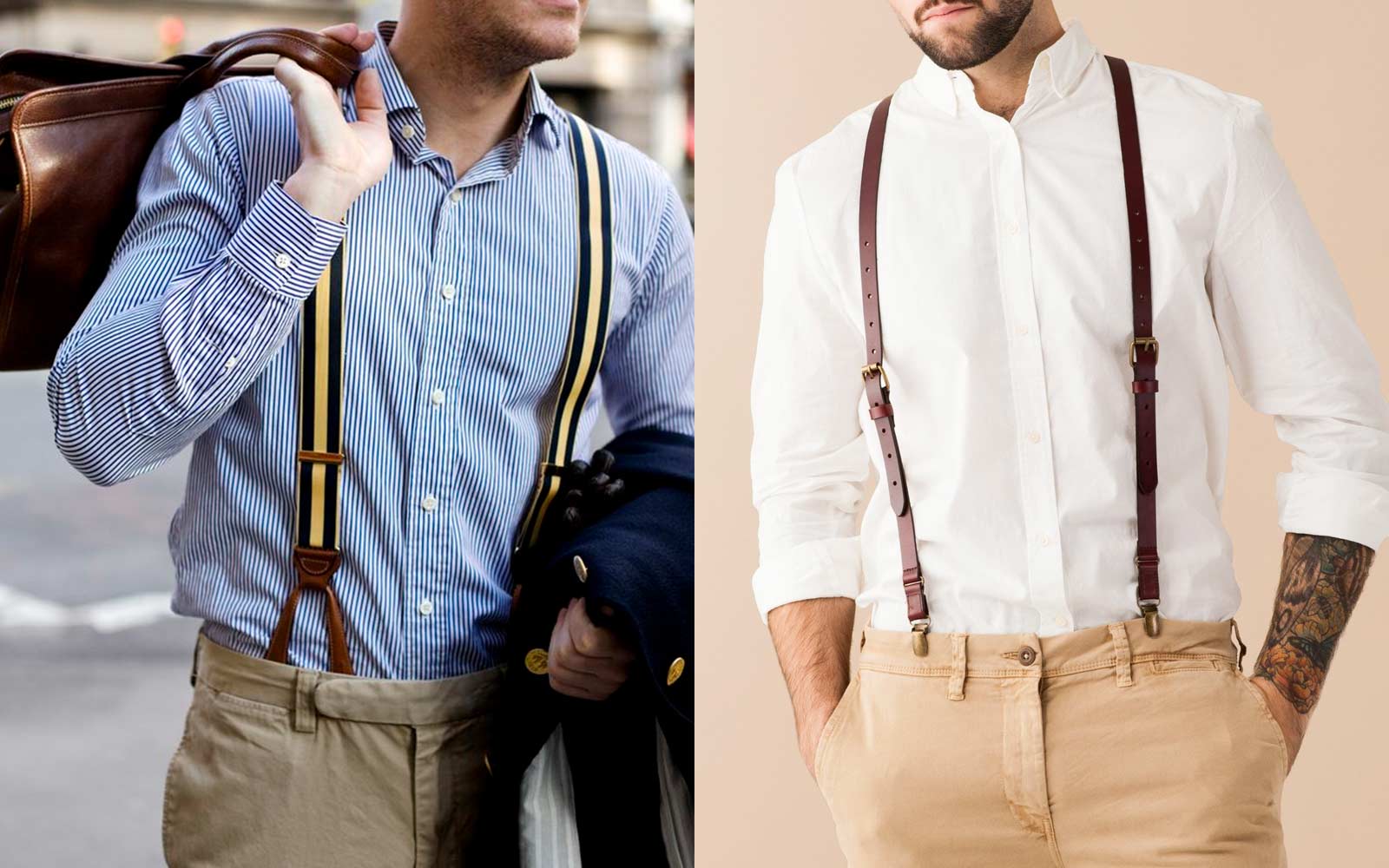
As the Autumn begins I thought a simple discussion of suspenders (braces for you Brits) might be of interest.
Specifically the debate about clip-on or button fastened ones. This debate has raged in re-enactor circles quite a bit.
Enjoy
The Victorian Society of Alberta
From the Gentlemanual
Are clip-on suspenders hopelessly tacky? If a man is going to wear suspenders, should he stick exclusively to suspenders with button-hole tabs? These are good questions, and they deserve good answers.
Clip-on suspenders have been around since 1894, and the argument “One shouldn’t wear clip-on suspenders because they’re not traditional” is difficult to sustain. With over a century’s worth of history, they’re as classic as any “classic” could be. Scroll through collections of old photos and you’ll see clip-on suspenders in abundance, from the Millennials of 1900 to the ruffians of original punk rock. Heritage isn’t the issue. The real problem with clip-ons these days is two-fold.
First, many of the big stores that sell everything from fertilizer to frozen french fries sell clip-on suspenders in their menswear departments. Marketplace ubiquity, affordability, and ease of use are the main virtues of mass-produced clip-on suspenders, most of which are made of semi-elasticated material. It is precisely this wide-distribution of low price clip-ons which gives rise to concerns about their street-cred.
When belts (and buckles) returned to the forefront of fashion, clip-on suspenders continued to appeal chiefly to three sorts of men: those who were accustomed to suspenders but never got on board with button-fastened ones; those who didn’t give a damn about actively presenting “a look;” and those whose style-sense tended to be at odds with trending notions of what counted as fashionable. Today the situation is a little dire. To put it bluntly, too many men wear clip-on suspenders with get-ups that make fashion police wish they were packing more than disapproving grimaces.
And that’s the second issue: all clip-on suspenders suffer a bit from guilt-by-association. It’s unfair, perhaps, but that’s just how it is, and a man wearing clip-on suspenders risks finding himself in the same situation as the man who wears a clip-on bow tie: if you’re going to wear a bow tie (argues the purist), you should take the time and make the effort to learn how to tie one; and if you’re going to wear suspenders, accept the extra expense and hassle involved with adding buttons to the inside of the waistband of your trousers and wear button-tab suspenders. This is one school of thought.
The first in person Days of Yore festival since 2019 was held on July 30 and 31 2022.
The event took place at its traditional location in Rosebud Park, Didsbury Alberta and was attended by almost 2000 people across the two days. There were eight reenactor groups from Alberta covering over a 1000 years of history from Viking times to WWII.

Our encampment was the second largest this year, the largest camp being that of the Sons of Fenrir, a Viking reenactor group.
We arrived on site on a very hot Friday afternoon, and began setting up watching a threatening sky building in the West.. Typical thunderstorm conditions for Summers in Alberta. The storm turned out to be part of a major storm system that brought heavy rain and large hail to many areas around us, luckily all we got was some nasty wind gusts and rain. Our camp was mostly setup and squared away before the storm broke so we just waited it out under a couple of large sunshades.


Events kicked off around 10:00 am when the gates opened for a flood of people coming to view battle displays, Civil War cannon fire, fur traders, Viking displays, WWI and WWII camps, WWII Military vehicles, and us!
Our displays included your editor's "Victorian Internet" a working telegraph office, a display tent with information on the First Nations Treaties, games, some period books and our lovely Ladies working on hand crafts, a hard working young man doing laundry, a WWI Nurse and her camp and a small display of Boer War items. A continuous croquet game was running as well.


Sunday was another bright, sunny, and very hot day.
The Vikings decided to liven things up in the afternoon by kidnapping our croquet master and his mallets. This necessitated some tricky negotiations by our president but the croquet mallets, and him, were returned with only minor casualties on both sides.


A fun event indeed.
Thanks to the Mountain View Arts Society of Didsbury for a great Days of Yore!
Looking forward to next year!
Thanks for reading.
The Victorian Society of Alberta.
This month we a have a YouTube video on Shopkeeper wear from the "Olde West".
Would be pretty much the same in any shop in the Empire frankly.😀
Enjoy
The Victorian Society of Alberta
This month we have a collection of "best sellers" from the 19th Century.
This post from Sea of Books.com has a list to check out!
Enjoy
The Victorian Society of Alberta
Here is the introduction (So as not to steal their thunder you'll have to visit the site to get the list 😁)
5 Mega Best Sellers from the 19th Century
I started putting together the figures for this post more than two years ago, when we were in the early stages of compiling our list of works that we wanted to look at on the project. Back then, I sat down at my desk with the thought of looking into what I naively assumed at the time was a simple question: which 19th-century novels were the biggest bestsellers in their own time?

It turns out this is NOT a simple question.
Many people have compiled lists of “the most popular 19th-century novels”, but these tend to include data from their entire lifespans – from their time of writing to the present day. Generally these lists are more reflective of what we think of the novels now, after years of varying-quality reprints, screen adaptations, and ham-fisted literary allusions, rather than what was popular in its own time.
In order to find some info on what your average Scrooge really had on his nightstand, or what volume Lady Audley would keep in her reticule for a bit of light reading on the coach, I went looking for contemporary sales figures. The main source of information that I found was contained in a series of articles by the scholar Richard Altick, which were compiled from his extensive research into author biographies over a lifetime of scholarship. (References at the end!) Making sense of these figures often involves comparing apples to oranges, though; if Alice In Wonderland sold 180,000 copies over its first 33 years of publication, does that it make it more or less of a bestseller than H. Rider Haggard’s Allan Quatermain, which sold 1700 copies in its first ten days?*
A number of factors would have affected the sales of a novel in 19th century Britain. Literacy rates varied greatly at different times, from as low as 50% (by some estimates) in 1800, to near 100% by the late 1890s. So, J. M. Barrie’s Margaret Ogilvy would have had a far larger potential audience when it came out in 1896 (selling 40,000 copies “almost at once”) than Hannah Moore’s Coelebs in Search of a Wife, published in 1809 (“14,000 in eight months”).
As well as this, the introduction of cheap and penny editions, the appearance of novels in serial format in magazines, and the rise and fall of subscription libraries such as Mudie’s all meant that as time went on, fiction – in various forms – could be consumed by a wider cross-section of the public. A person in Victorian England would not necessarily have had to own a book to enjoy it, or even been literate themselves; books could have been shared between friends or borrowed from a circulating library (or later on, a public one), and reading aloud to a group was still a common pastime. Sales figures, then, aren’t an entirely reliable indicator of how popular a novel was in the 19th century. In fact, early in the century, books were so difficult for anyone except the extremely rich (who could, and often did, buy them solely for decorative purposes) to afford, that most of the reading population relied entirely on libraries for their reading material. As the poet Robert Southey stated in 1814, “they who buy books do not read them, and … they who read them do not buy them.”
All that being said, we can fairly safely say that these works were among the Dan Browns of their time, if not the Harry Potters.
Continued at the link above.
