Tuesday, 2 March 2021

March Book Tuesday

March already!

How time flies when you are having fun.

Here are two books to add to your collection for this months Book Tuesday.

Enjoy
Victorian Society of Alberta

The True Spirit and Original Intent of Treaty 7
by Treaty 7 Elders


The True Spirit and Original Intent of Treaty 7 is based on the testimony of over 80 elders from the five First Nations involved in Treaty 7 - the Bloods, Peigans, Siksika, Stoney, and Tsuu T'ina. Their recollections highlight the grave misconceptions and misrepresentations between the two sides, due in part to inadequate interpretation and/or deliberate attempts to mislead. The elders consistently report that the treaty as they understood it was a peace treaty, not a surrender of land, and that they had agreed to "share" the land with the white newcomers in exchange for resources to establish new economies - education, medical assistance, and annuity payments. The book provides both a historical overview of Treaty 7 and an analysis of the literature on treaties generally and Treaty 7 specifically. It makes clear that different agendas, different languages, and different world views affected each side's interpretation of events. This review of the events and interpretations surrounding Treaty 7 takes place at a time when aboriginal and indigenous peoples all over the world are re-evaluating their relationships with imperial powers. It was undertaken in good faith in hopes that it will begin a dialogue that can alter the dominant discourse of Euro-Canadian society, which has been so damaging to aboriginal people.


The Domestic Revolution: How the Introduction of Coal into Victorian Homes
by Ruth Goodman


The Domestic Revolution by historian Ruth Goodman is an interesting insight into how coal, and later soaps changed Britain, and the Empire. Everyone has heard of the Industrial Revolution, but in many ways the changing habits of how humans burned fuel for warmth, food-making and the domestic domain was more significant, if less well known.

For thousands of years humans have burned wood, peat, or variations thereof in the home – cooking and keeping warm. This practice shaped the landscape – wood was used everywhere – fuel, building, weapons, war, ships, homes etc. Land was managed, farmed, coppiced and the industries around this were important. Many folks did not travel far, and so utilised what was around them. Certain foods and ways of cooking do not manage on wood or peat, and others do not manage well on coal.

Ms Goodman describes cooking on wood, peat, dung and charcoal, how it was sourced and the foods which worked best. Cleaning was done, largely with wood ash, lime and various other intriguing ways. Ash doesn’t work on coal dirt and so hot water became the norm, and new vessels for boiling, new detergents and new roles.

Then came coal – which burns differently from wood, cooks differently, is used in industry differently, heats differently. People, pots, manufacturing, transport, food, housing, cleaning and pretty much every aspect you can think of changed with it, or as a result. Coal creates smoke which leaves smuts, dirt and dust. It produces pollution and is much harder to clean off. All those coal fires – say goodbye to your family tapestry, and your old cleaning habits. Bring on different smelting, transport, industry, soap-making, production and recipes.

The domestic hearth was, for much of history, the female domain, and although the records from women are scarce, from the 19th Century the records do bring to life the challenges, solutions and habits of women, from highborn ladies, to the lower classes. Status was important, and coal and soap brought with them status.

The book is a little slow to start, but the author knows her stuff and the book brings an interesting view on the lives of our ancestors, and how change, once it starts can be inexorable.

A good book for writers, and readers of history/historical fiction/fantasy as a reference to living with wood fires and coal, foods, cleaning and the role of women in these times (who became more tied to the home as things changed).

Wednesday, 10 February 2021

February Book Tuesday

A quick one for this month's delayed Book Tuesday.
Oops! 😏
I hope everyone is staying warm and healthy!

Enjoy
Victorian Society of Aberta

Ranching Women in Southern Alberta
-by Rachel Herbert

Once dominated by large cattle operations covering thousands of acres, Alberta in the 1880s-1930s saw a shift as small, family-owned ranches began to dot the province's southern plains. While this era of agriculture might conjure images of cowboys riding through the foothills or ranch hands tilling the prairie fields, women, too, played an integral part in this rapidly changing industry. Ranching Women in Southern Alberta explores the world of these women, and their efforts to ensure the economic viability of their family ranches and the social harmony of their families and communities. Rachel Herbert examines what life was like for ranching women, who faced a myriad of challenges while at the same time enjoying more personal freedom than their urban and European contemporaries. This book pays homage to the brave and talented women who rode the range, carving out a role for themselves during the dawn of the family ranching era.


Tuesday, 5 January 2021

Happy New Year's Book Tuesday

Well we are off on the odyssey of a new year!
Wishing you all a very safe, healthy, and prosperous 2021.

Here is the first Book Tuesday of the New Year.

Enjoy
Victorian Society of Alberta

We Don't talk about Those Women
Lethbridge's Red Light District 1880s to 1940

- by Belinda Crowson

A fascinating look at the history of Red Light District of Lethbridge Alberta.


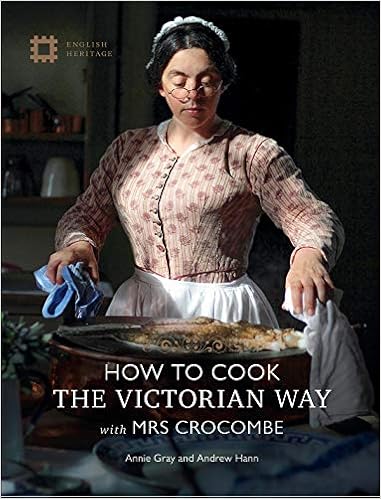
 How to Cook The Victorian Way
 with Mrs Crocombe

 - by Annie Gray and Andrew Hann

Mrs Crocombe is the breakout star of English Heritage's wildly popular YouTube series, The Victorian Way. Millions of fans around the globe devour her historical cookery videos, and their hunger for her content shows no sign of abating. In delightful contrast to the high-octane hijinks of many YouTube celebrities, The Victorian Way offers viewers a gentle glimpse into a simpler time - an age when tea was sipped from porcelain, not from plastic cups; when mince pies were meaty and nothing was wasted; when puddings were in their pomp and no kitchen was complete without a cupboard full of copper pots and pans. Avis Crocombe really did exist - she was head cook at Audley End House in Essex from about 1878 to 1884. Although only a little is known about her life, her handwritten cookery book was passed down through her family for generations and rediscovered by a distant relative in 2009. It's a remarkable read, and from the familiar (ginger beer, custard and Christmas cake) to thefantastical (roast swan, preserved lettuce and fried tongue sandwiches), her recipes give us a wonderful window into a world of flavour from 140 years ago. How to Cook: The Victorian Way with Mrs Crocombe is the definitive guide to the life, times and tastes of the world's favourite Victorian cook. It features authentic do-it-yourself recipes chosen and tested by Dr Annie Gray alongside insights into daily life at Audley End from Andrew Hann, beautiful food photography and a foreword by the 'face' of Mrs Crocombe, Kathy Hipperson. It showcases the best recipes from Mrs Crocombe's own book, alongside others of the time, brought together so that every reader can put on their own Victorian meal. It's a moreish smorgasbord of social history - an absolute must for fans, foodies and anyone with an appetite for the past.


Friday, 25 December 2020

Tuesday, 1 December 2020

December Book Tuesday!

 Welcome to another Book Tuesday offering for you.

Enjoy
Victorian Society of Alberta


They Came
-by Billie Milholland

 European settlement of Western Canada was both rapid and dramatic. People came from all over the world to take advantage of cheap land ($10 for 160 acres/64.7 hectares). Women most often came with parents, or followed husbands and brothers. They traded extended family life in familiar landscapes imbued with ancient histories for life in an undeveloped country with few roads and rough, new communities full of people from diverse cultures, speaking dozens of different languages.

We know the stories of men who settled and developed the West, but of the women, except for a handful of rich and famous, we know little. They Came tells the heroic stories of 113 women who came to Western Canada from somewhere else between 1890 and 1950. Following each story is a recipe, something their children and grandchildren remember fondly....


Neighbours and Networks, the Blood Tribe in the Southern Alberta Economy
-by W. Keith Regular

Neighbours and Networks explores the economic relationship that existed between the Blood Indian reserve and the surrounding region of southern Alberta between 1884 and 1939.

The Blood tribe, though living on a reserve, refused to become economically isolated from the larger community and indeed became significant contributors to the economy of the area. Their land base was important to the ranching industry. Their products, especially coal and hay, were sought after by settlers, and the Bloods were encouraged not only to provide them as needed, but also to become expert freighters, transporting goods from the reserve for non-Native business people. Blood field labour in the Raymond area's sugar beet fields was at times critical to the functioning of that industry. In addition, the Bloods' ties to the merchant community, especially in Cardston and Fort Macleod, resulted in a significant infusion of money into the local economy.

Keith Regular's study fills the gap left by Canadian historiography that has largely ignored the economic associations between Natives and non-Natives living in a common environment. His microhistory refutes the perception that Native reserves have played only a minor role in regional development, and provides an excellent example of a cross-cultural, co-operative economic relationship in the post-treaty period on the Canadian plains.


Wednesday, 11 November 2020

Lest We Forget

Today as we remember those who sacrificed themselves in service to Empire and in response to the commands of their Kings and countries. We must also remember that ALL the men and women who participated in WWI were "Victorians" and those who served in WWII were mostly "Edwardians".
These two titanic conflicts changed the worlds of these people in unimaginable ways. Neither the Victorians or the Edwardians, as we tend to study and re-create them, remained when the smoke and dust settled.

Not only did hundreds of thousands of them die, but the very cultural structures in which they had grown up were swept away.

In 1914 a farmer in Western Canada, a fisherman on the coasts, a labourer in the factories of Eastern Canada, or a miner in the far north, went when their King called because that was what one did.
102 years ago when the guns fell silent at 11:00 AM on November 11th they did not know that everything had changed forever, but they hoped that at least war was done with.

Alas their children found that was not true.

There are none alive now who remember the world of WWI and few indeed that remember WWII.
We owe it to them that we remember, we also owe their World, the Victorian and Edwardian World we celebrate, that it not be forgotten either.

Lest we forget.
God Save the Queen!

Photo by Neil Zeller


Friday, 6 November 2020